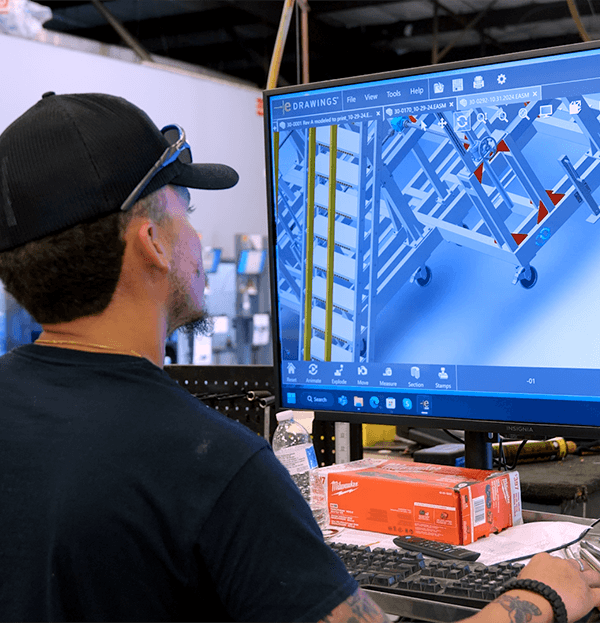

Where Manual Handling Becomes a Safety and Efficiency Problem
Aircraft engines, blades, cowlings, and heavy military materials don't move safely by hand. The moment a component is too heavy, too awkward in shape, or too critical to risk damaging, purpose-built handling equipment stops being a convenience and becomes a safety requirement.
This shows up constantly in aviation maintenance and military logistics — and each case is a different problem, not one.
{{ c.body }}
JE's Ground Support Equipment Line
Five equipment types — carts and dollies, engine stands, cowling racks, blade racks, and aircraft dollies — each engineered for the specific demands of aviation maintenance and military logistics. They are not interchangeable: each solves a different part of the handling problem.
Amber marks the function each type is engineered for. A facility moving engines and storing blades needs two different pieces of equipment, not one adapted to both.
View material handling equipment
How Does JE Engineer a Safe Material Handling Solution?
JE's engineering team designs handling equipment around the specific component's weight, shape, and the operational task it needs to support — whether that's an engine stand, a storage rack, or a cart built for military and DOD material handling requirements.
{{ s.title }}
{{ s.body }}
Trusted With Safety-Critical Outcomes
JE's material handling equipment is trusted by both commercial and government customers to keep maintenance operations safe and efficient — reflected directly in what two separate customers said about the work.
{{ v.quote }}
Where JE Excels
The equipment is engineered for the actual component and task — which is why customers describe it in terms of what their people can now do safely, rather than in terms of specifications.
{{ a.title }}
{{ a.body }}
Moving It, and Getting to It
Handling equipment moves the component. Access equipment moves the technician. Most facilities need both, engineered separately for their different purposes.
Frequently Asked Questions
{{ q.question }}
{{ q.answer }}