
{{ e.index }}
{{ e.title }}
{{ e.body }}
An engineered structure accounts for dead load, live load, deflection limits, anchoring forces, and environmental stress factors — all calculated and documented, not estimated based on similar past projects.
A structure that's merely fabricated to look like it should work is a liability waiting to be discovered.
A structure that's engineered has already answered the hard questions — how much weight, from what direction, under what conditions — before it's built, not after something fails.
Every custom structure JE engineers incorporates structural analysis covering dead load, live load, deflection limits, anchoring forces, and environmental stress — with structural calculations documented, guardrail systems force-tested, and slope geometry validated before delivery.
This isn't an optional add-on for structures where it seems important — it's the standard applied across JE's custom-engineered work, whether the structure is a gangway, an access platform, or a maintenance fixture built for a specific application.
Where a competitor might fabricate an access platform that looks compliant, JE's process is built to engineer the actual compliant safety infrastructure underneath it — with the calculations to prove it.
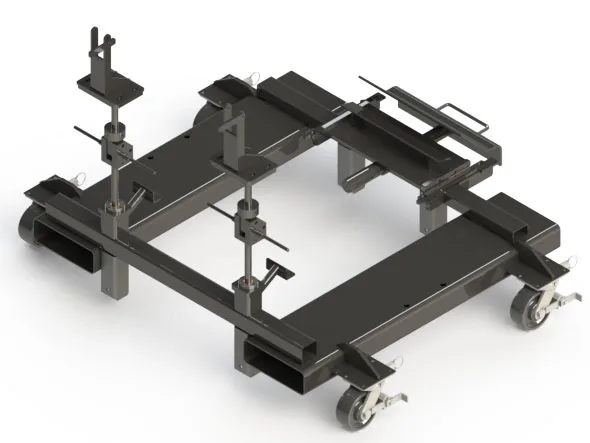
Where a structure faces real consequences for getting it wrong — high-value aircraft platforms, marine environments with constant environmental stress, and facility structures that must meet strict federal, state, and local regulatory requirements.
{{ e.body }}
JE Technology Solutions positions itself as the clear industry leader in engineered safety infrastructure specifically because engineering depth — not just fabrication — is what delivers measurable, long-term structural reliability.
{{ a.body }}
Every route below leads to equipment engineered using the same structural analysis process described on this page — documented load, deflection, and environmental stress calculations, not a design that only looks right on paper.

JE publishes engineering-depth guidance on structural design and compliance — because understanding what "engineered" actually requires helps facilities evaluate any structural partner's claims, not just JE's.
{{ q.answer }}