
Maintaining the Infrastructure, Not Just the Vehicles
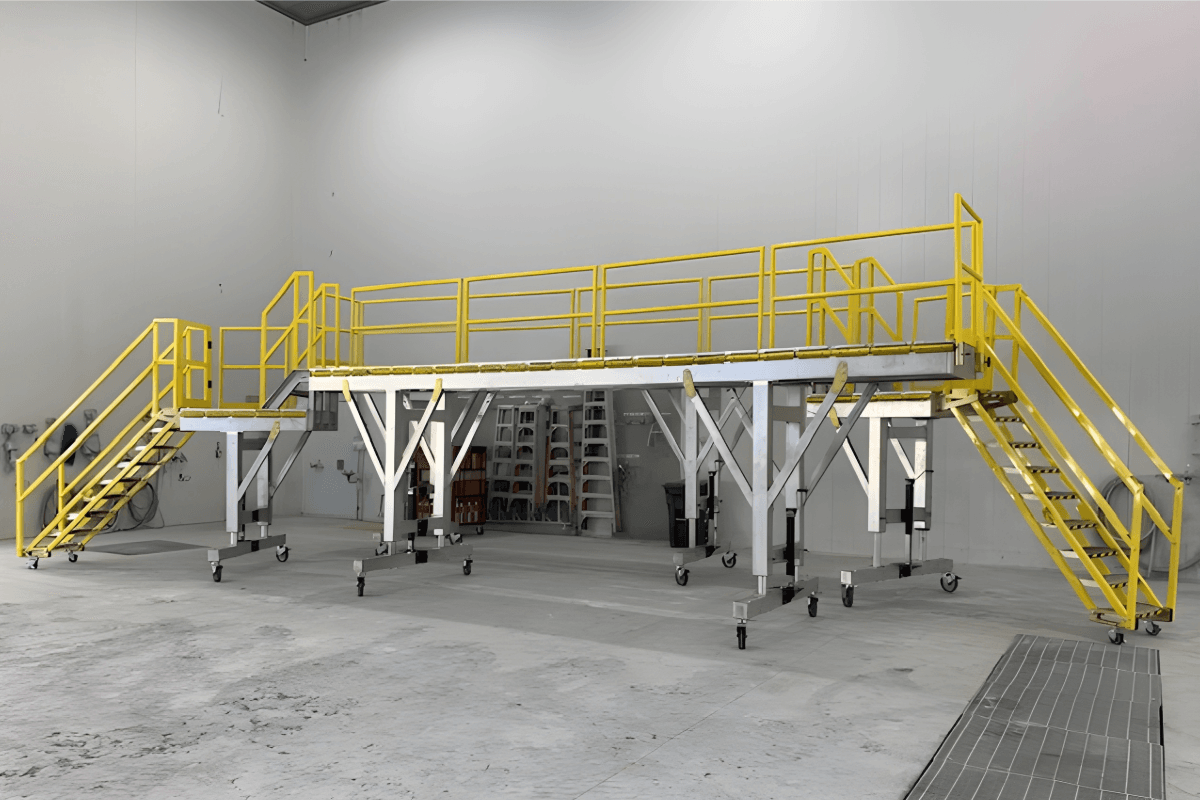
JE provides transportation maintenance stands and boarding platforms for train and bus stations, alongside its broader work supporting railcar operations — recognizing that station and trackside infrastructure require their own dedicated access solutions.
Access equipment here has to accommodate maintenance crews and passenger safety at the same time.
What Makes Transit Station Access Different From Vehicle Maintenance?
Station and infrastructure maintenance happens in active public environments, often while a facility remains in service — a different constraint than vehicle maintenance, which typically occurs in a dedicated depot away from public access.
Access equipment for transit infrastructure needs to account for passenger proximity, minimal disruption to service, and compliance with accessibility and safety requirements specific to public transit facilities — considerations that don't apply the same way to a railcar undergoing maintenance in a depot.
How Does JE Approach Transit Infrastructure Access Projects?
JE applies its standard custom-engineering process to transit infrastructure projects — understanding the specific station, platform, or trackside asset and the maintenance task it requires, then engineering access equipment that fits both the physical structure and the operational constraints of an active transit facility.
The same structural engineering discipline used across JE's custom-engineered structures — applied to working around a facility that stays open.
Custom Engineering for Transit Infrastructure
JE's transit infrastructure equipment draws on the same OSHA-compliant, structurally validated engineering discipline applied across JE's broader access platform work, adapted to station and trackside application requirements.

Where JE Excels
JE's structural engineering discipline, proven across custom access equipment for aerospace, marine, and vehicle-specific land transport applications, extends to station and trackside infrastructure.
{{ a.title }}
{{ a.body }}
Related Resources
A transit authority's needs usually span both sides of the system. These are the pages that cover the other half, and the disciplines this page draws on.
Frequently Asked Questions
{{ q.question }}
{{ q.answer }}