
{{ h.index }} · Consideration
{{ h.title }}
{{ h.body }}
JE's Industrial Guard series already serves the energy and oil and gas sectors as part of its broader heavy-operations product line. This page addresses oil and gas as its own regulatory environment.
Addresses the load, the height and the surface — the general OSHA picture that applies to most facilities.
Adds the hazard profile — what the chemical is, what atmosphere it creates, and what the equipment standing in it must be compatible with.
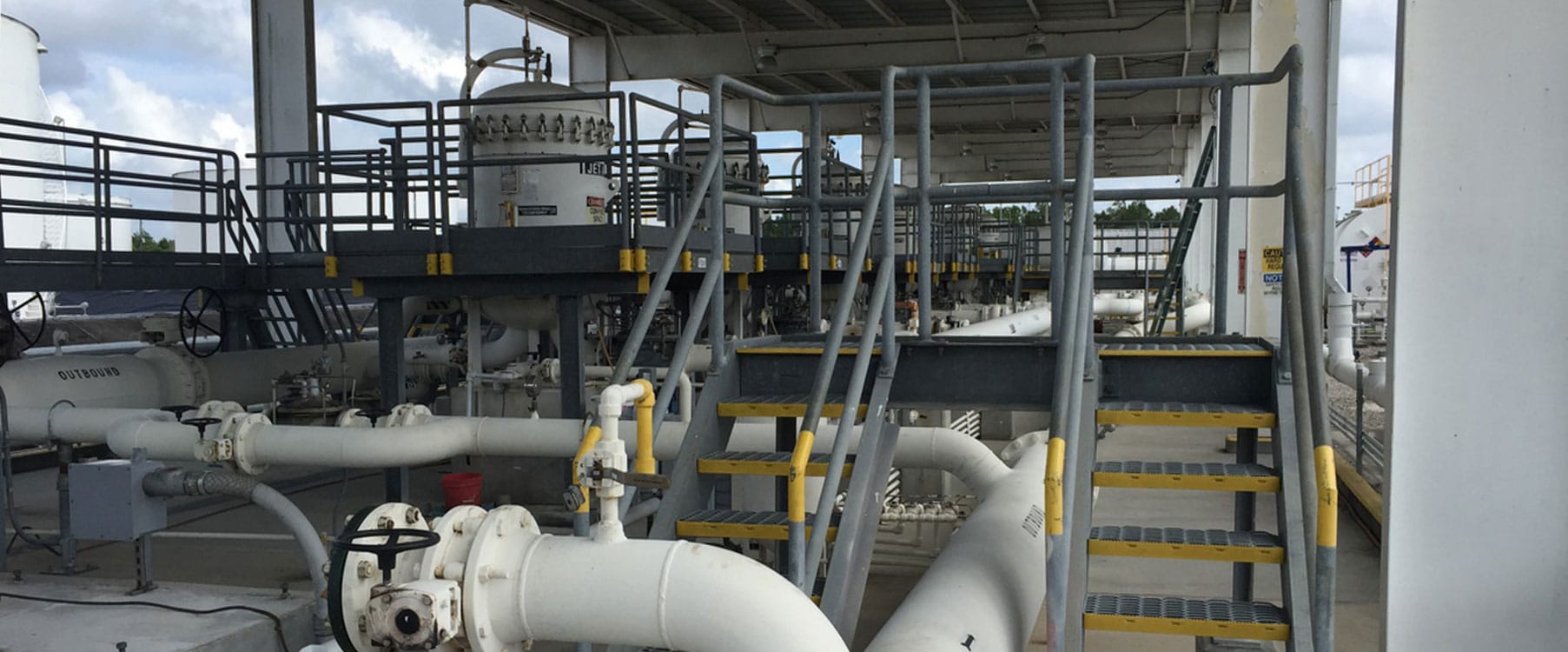
Refineries, processing plants and drilling operations often involve hazardous material exposure, explosive atmosphere considerations, and equipment access points requiring materials and designs suited to those specific risks — beyond what general industrial access equipment typically addresses.
{{ h.body }}
Facility access equipment in these environments needs to account for the specific hazard profile of the site — not the general case.
JE applies its Industrial Guard engineering discipline — built for extreme vibration, heavy loads, and continuous-output demands — to oil and gas facility access challenges, with attention to the facility's specific PSM and API-related requirements.
Understand the facility's hazard profile and regulatory obligations first — then engineer the access solution.
Rather than applying a generic industrial platform to an environment with its own distinct safety framework.
JE's oil and gas equipment draws on the same extreme-conditions engineering discipline behind Industrial Guard, with attention to PSM and API standards relevant to oil and gas facility access.

JE's extreme-operations engineering discipline, proven across power plant and industrial applications through Industrial Guard, provides the structural foundation needed for oil and gas facility access.
{{ a.body }}
This page builds on JE's documented heavy-operations engineering plus the PSM and API regulatory context that governs oil and gas facilities specifically.
{{ q.answer }}